
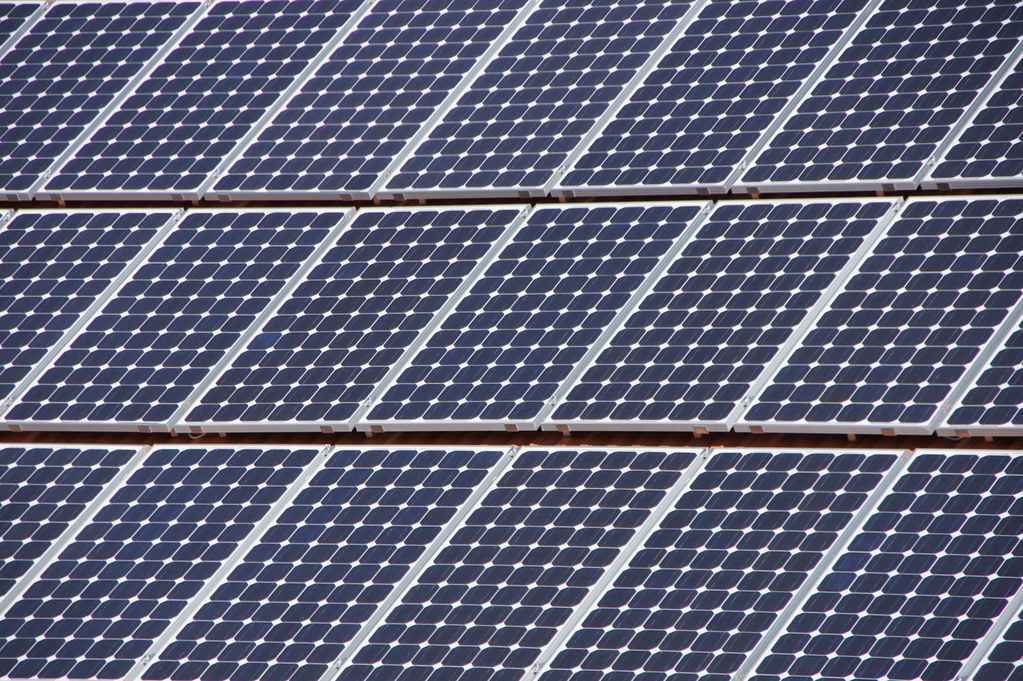
If you’ve ever looked at a solar panel on someone’s roof and thought “I get it, sunlight goes in, electricity comes out” — that’s a start, but it leaves out a lot. Understanding the full process matters because it helps you make smarter decisions about panel types, inverter choice, battery storage, and system sizing. Let’s walk through exactly what happens from the moment sunlight hits your roof to the moment it powers your refrigerator.
Thank you for reading this post, don’t forget to subscribe!Step 1: Photons Hit the Solar Cell
Sunlight is made up of particles called photons — tiny packets of energy traveling at the speed of light. When photons strike a solar cell (the small square units that make up a full panel), they transfer their energy to electrons inside the cell’s semiconductor material, almost always silicon.
This is the photovoltaic effect — discovered in 1839 but only practically useful since the 1950s. When a photon hits a silicon atom with enough energy, it knocks an electron loose. That electron is now free to move.
Step 2: The P-N Junction Creates a One-Way Street
Solar cells are built in two layers — a positively charged layer (P-type silicon) and a negatively charged layer (N-type silicon). The boundary between them is called the P-N junction.
This junction acts like a one-way gate. When sunlight knocks electrons loose, the electric field at the P-N junction pushes those electrons in one specific direction. That directed movement of electrons is direct current (DC) electricity. Metal contacts on the top and bottom of the cell capture this flow and send it down a wire.
One solar cell produces about 0.5 volts — not enough to power anything useful. That’s why cells are wired together into panels (typically 60–72 cells each), and panels are wired together into a full array on your roof.
Step 3: The Inverter Converts DC to AC
Your home runs on alternating current (AC) — the type of electricity that comes from the grid. Solar panels produce DC. Those two don’t work together directly, which is why every solar system needs an inverter.
The inverter takes the DC electricity from your panels and converts it into 120V or 240V AC power that your appliances, outlets, and lights can use. It’s the most critical component in the system after the panels themselves — and the one most likely to need replacement during the system’s 25–30 year life. If you want to go deeper on this piece of equipment, read our guide on what a solar inverter is and why it matters.
Step 4: Your Home Uses the Power First
Once the inverter outputs AC electricity, it flows to your home’s main electrical panel (breaker box). From there, it powers whatever is running in your home at that moment — lights, the AC, the dishwasher, whatever is on.
Solar power is always used locally first. Your home doesn’t “choose” to draw from the grid when solar is available — the inverter and panel are wired in a way that makes solar the default source during daylight hours.
Step 5: Excess Power Goes to the Grid (or a Battery)
If your panels produce more electricity than your home is using at that moment — which often happens on a sunny afternoon when nobody’s home — that surplus has to go somewhere. In a standard grid-tied system, it flows out through your utility meter and onto the grid.
Your utility company tracks this exported power and gives you a credit on your bill through a program called net metering. That credit offsets what you draw from the grid at night or on cloudy days. It’s how most solar homeowners achieve near-zero electric bills. For the full breakdown of how that billing works, read our guide on what net metering is and how it actually works.
What Affects How Much Power Your Panels Produce?
Several real-world factors affect solar output beyond just whether the sun is shining:
- Panel efficiency: How much of the sunlight hitting the panel actually becomes electricity. Premium monocrystalline panels convert 20–23%, while budget options sit around 15–17%.
- Temperature: Counterintuitively, very hot days reduce output. Panels are most efficient in cool, bright conditions — a clear January day can outperform a muggy August afternoon.
- Shading: Even partial shade on one panel can reduce output across the whole string. This is why inverter type matters if your roof has trees or chimneys nearby.
- Orientation and tilt: South-facing roofs at a 30–40 degree pitch capture the most sunlight in the U.S. East or west-facing roofs still work, just at reduced output.
- Dust and debris: A dirty panel can lose 5–7% efficiency. Rain handles most of this naturally in most climates.
Not All Panels Work the Same Way
While all solar panels use the photovoltaic effect, how the silicon is structured makes a big difference in efficiency, cost, and lifespan. The three main types — monocrystalline, polycrystalline, and thin-film — each have different trade-offs worth understanding before you buy. Read the full breakdown in our guide to types of solar panels: monocrystalline vs. polycrystalline vs. thin-film.
How Much Sun Does Your Roof Actually Need?
One of the biggest misconceptions about solar is that you need to live in Arizona to benefit from it. That’s not true. What matters is your local peak sun hours — a measure of solar intensity by region — and your electric bill. Even states like Massachusetts or Washington average enough sun hours to make solar financially worthwhile for most homeowners. We cover exactly how to calculate this in our guide on how much sunlight your home actually needs for solar.
The Bottom Line
Solar panels work by converting photons into moving electrons, running that current through an inverter to create usable AC power, and feeding your home first before sending any surplus to the grid. The system is elegant because it has no moving parts — no combustion, no spinning turbines, no fuel. The sun hits the panel, electrons move, you get electricity.
Understanding this process helps you ask the right questions when getting quotes — why inverter type matters, why panel efficiency affects the number of panels you need, and why shading can undermine an otherwise well-designed system. The more you know going in, the better deal you will get coming out.